

Published by: Recovery Talk
Author: Nii
Reading Time: ~6 minutes
Why Isolation Is More Dangerous Than We Think
One of the most powerful truths in addiction recovery is this:
Relapse doesn’t usually start with using.
It starts with silence.
One of the most common warning signs before relapse is isolation.
Not always physical isolation —
but emotional withdrawal, silence, and the feeling of “I’ll handle this on my own.”
Relapse prevention research, public-health recovery frameworks, and decades of recovery community experience all point to the same pattern:
when connection drops, risk increases.
This is why ongoing engagement and early outreach are emphasized across recovery models. When people stay connected, they are more likely to notice warning signs early, ask for support sooner, and interrupt relapse before it escalates.
At CARE, we take this principle seriously — and we translate it into a clear, practical community standard.
The 48-Hour Rule (Our Community Standard)
The 48-Hour Check-In Rule is not a research-derived time threshold.
It is a community safety practice.
We have chosen 48 hours as a clear boundary because prolonged silence makes it easier for stress, cravings, shame, or emotional overload to grow unnoticed. Frequent check-ins help keep recovery visible, shared, and supported.
This approach aligns with:
- relapse-prevention models that emphasize early interruption
- public-health recovery frameworks that stress continuous engagement
- recovery programs that discourage extended isolation
- lived recovery experience showing that silence often precedes relapse
The goal is not surveillance.
The goal is connection before crisis.
A simple check-in — a message, a voice note, a call — can be enough to remind someone they are not alone and that support is available.
That is what the 48-Hour Check-In Chain is designed to do.
What Is the 48-Hour Check-In Chain?
It’s simple:
Every 48 hours, you check in with 3 people — and they check in with you.
A check-in can be:
✔ a voice note
✔ a short message
✔ a call
✔ a quick “I’m doing okay today”
✔ a “Today was tough, but I’m holding on”
The goal is not long conversation.
The goal is connection before crisis.
Why 48 Hours? (The Science Behind This Window)
Addiction experts refer to this as the “emotional crash window.”
Here’s why:
- The average emotional dip after stress or trigger happens within 24–48 hours
- When a person goes two days without support, they are more vulnerable to impulsive decisions
- Shame grows faster in silence than in conversation
- Staying connected interrupts negative mental loops
- Breaking isolation reduces cravings by regulating dopamine
In simple terms:
Two days is long enough for the mind to wander, but short enough to catch a downward spiral early.

What Makes Check-Ins So Powerful?
Recovery isn’t just biochemical — it’s deeply emotional.
A check-in provides:
✔ Emotional Regulation
Sharing how you feel helps the brain process and release tension.
✔ Interruptions to Craving Cycles
Cravings often disappear after one honest message.
✔ Accountability
You’re less likely to make risky choices when someone is expecting to hear from you.
✔ Safety
You know you’re not alone, even on your worst days.
✔ Belonging
Human connection is a protective factor — the opposite of addiction’s isolation.
Psychologist Dr. Bruce Alexander said it simply:
“Addiction is disconnection.
Recovery is reconnection.”
What to Say During a 48-Hour Check-In
You don’t need a script.
Just honesty.
Here are simple examples:
If you’re doing well:
- “Feeling steady and present today.”
- “Today was calm. Grateful.”
- “Energy is good. No cravings.”
If you’re struggling:
- “Today feels heavy, but I’m pushing through.”
- “My mood is low. I’m staying safe, just checking in.”
- “Cravings came up, but I didn’t act on them.”
If you slipped:
- “I need support. I had a moment. Can we talk?”
- “I’m not okay. I need help before this gets worse.”
Check-ins are not about perfection —
they’re about honesty, connection, and catching yourself early.
Why Silence Is So Dangerous (The Psychology of Withdrawal)
When someone pulls away for more than 48 hours, it’s often because:
- They feel ashamed
- They’re overwhelmed
- They’re emotionally numbing
- They’re hiding something
- They don’t want to “bother” anyone
- They feel they are disappointing someone
- They think people won’t understand
- They believe they must fix things alone
These are all warning signs, not failures.
The check-in chain prevents small emotional cracks from turning into full emotional collapse. Remember- Connection Can Prevent Relapse.
How to Build Your 48-Hour Chain
Choose three people who are:
✔ emotionally stable
✔ trustworthy
✔ consistent
✔ not easily overwhelmed
✔ available for quick check-ins
✔ encouraging without judgment
They do not need to be perfect.
They just need to show up every 48 hours.
Your chain can include:
- a recovery partner
- a friend
- a family member
- a sponsor
- someone from the Recovery Talk community
Once your three people are selected, create a simple message:
“Hey, I’m building my 48-hour chain for December.
Can you be one of my check-in partners?”
If they say yes, you’re halfway there.
What Healthy Check-In Boundaries Look Like
A good check-in chain is supportive, not exhausting.
The rules:
Rule 1 — Keep it simple
One message is enough.
Rule 2 — No pressure
Check-ins are invitations, not demands.
Rule 3 — No judgment
People must feel safe.
Rule 4 — No fixing
Your job is not to solve problems — it’s to listen.
Rule 5 — Stay consistent
The magic is in the regularity.
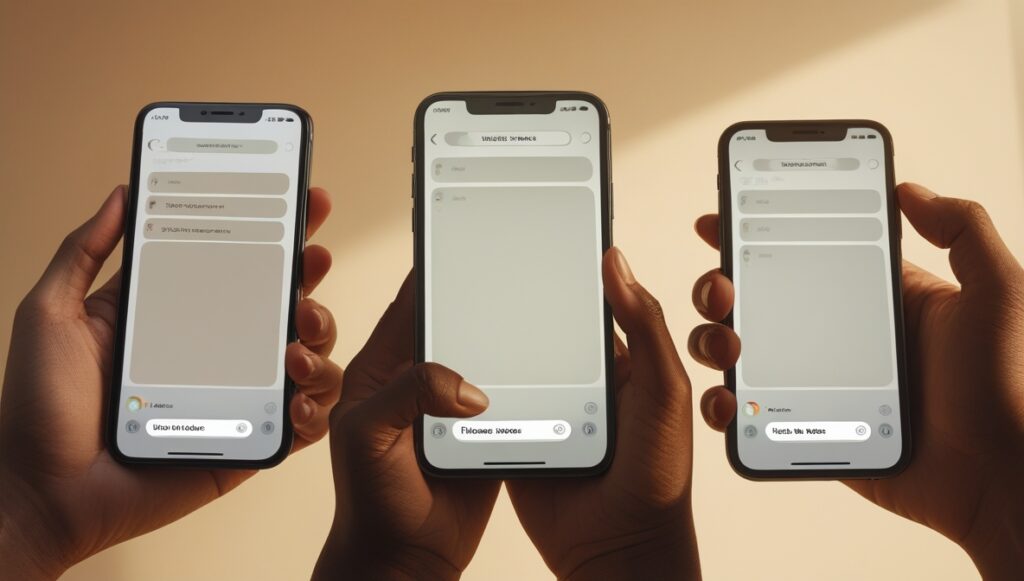
How to Respond When Someone in Your Chain Is Struggling
Keep responses simple and grounding:
- “I’m here. You’re not alone.”
- “Thank you for checking in. Proud of you for being honest.”
- “One moment at a time.”
- “You did the right thing by reaching out.”
- “Let’s breathe through this.”
- “Do you want to talk or rest?”
Many people are afraid to respond incorrectly.
But remember:
Presence is more important than perfect words.
Connection Can Prevent Relapse.
What to Do If Someone Breaks the 48-Hour Window
Don’t shame them.
Don’t panic.
Don’t assume relapse.
Just send a gentle message:
“Hey, haven’t heard from you.
Just checking in to make sure you’re safe.
No pressure. I’m here.”
This message communicates:
✔ safety
✔ availability
✔ non-judgment
✔ connection
Exactly what the brain needs during vulnerability.
The Emotional Power of a Check-In Chain
When people practice this consistently, they report:
- less anxiety
- fewer cravings
- stronger boundaries
- more confidence
- less guilt
- higher self-awareness
- reduced relapse risk
- deeper relationships
Humans are not built to survive alone.
We’re built for community.
Tips to Strengthen Your Chain
1. Set reminders
Use a phone alarm or calendar notification.
2. Rotate emotional responsibility
Don’t place pressure on one person.
3. Normalize honesty
Celebrate honest check-ins, not perfect ones.
4. Keep communication open
Let your chain know if your schedule changes.
5. Practice vulnerability
A single moment of honesty can save your life.
The Recovery Talk Sunday Workshop
In this week’s workshop, we’ll dive into:
✔ Why isolation activates relapse pathways
✔ How to build an effective 48-hour chain
✔ What to do when someone ghosts the group
✔ How to check in without feeling like a burden
✔ How to support someone without taking on emotional weight
✔ A live practice session for real check-in conversations
If you’ve ever struggled with “I don’t want to disturb anyone,” this class will free you.
Sunday at 6pm on Zoom — free and open to the community.
Click Here 👆 To Join US
Stay Connected. Stay Safe. Stay Alive.
The 48-Hour Check-In Chain is not just a tool.
It’s a lifeline.
It protects you when:
- your emotions get heavy
- your thoughts get dark
- your environment gets risky
- old habits try to creep back
- shame whispers “hide”
Every time you check in, you choose life.
Every time you reach out, you interrupt the cycle.
Every time you answer someone else, you become part of their safety net too.
Nobody in Recovery Talk walks alone.
Not this December.
Not ever.
Remember- Connection Can Prevent Relapse.
Ref:
Foundational Relapse Prevention Models
- Marlatt, G. A., & Gordon, J. R. (1985). Relapse prevention: An Overview of Marlatt’s Cognitive-Behavioral Model.
- Gorski, T. T. (1990). The CENAPS model of relapse prevention. Journal of Psychoactive Drugs, 22(2), 125–133.
- Bowen, S., Chawla, N., & Marlatt, G. A. (2021). Mindfulness-based relapse prevention for addictive behaviors (2nd ed.).
Supporting Academic Reviews
- Larimer, M. E., Palmer, R. S., & Marlatt, G. A. (1999). Relapse prevention: An overview of Marlatt’s cognitive-behavioral model. Alcohol Research & Health, 23(2), 151–160.
- Melemis, S. M. (2015). Relapse prevention and the five rules of recovery.
- Bowen, S., et al. (2014). Relative efficacy of mindfulness-based relapse prevention… JAMA Psychiatry, 71(5), 547–556.
Practice-Based Recovery Frameworks
- Inspire Malibu. (2023). COPE model combines with relapse prevention strategies.
Related Posts

Rebuilding Trust Without Surveillance: Love, Boundaries & Letting Go of Control

Love After Addiction: What Healthy Relationships Actually Look Like